
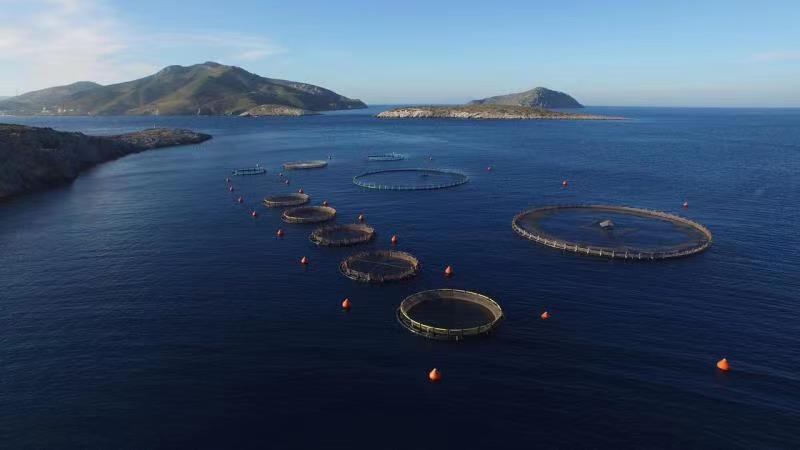
Walking along riversides, seashores, or passing by reservoirs and ports, you have probably seen the “little bumps” on the water surface—cylindrical buoys and lit floating markers. Though seemingly insignificant, they silently guard water safety and assist in production and daily life. Today, we will use plain language to explain what buoys and floating markers are, what they are used for, and why they can float on water.
First, distinguish: Buoys and floating markers are not the same, but they are inseparable
Many people confuse the two. In fact, they are “partners”, and their core is inseparable from “buoyancy”—the upward force exerted by a liquid on an object immersed in it, just like we won’t sink when lying on the water surface.
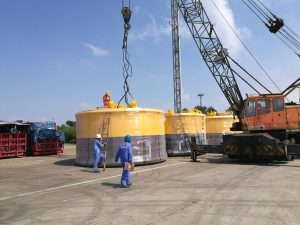
✅ Buoy: Like a “water base”, mostly hollow cylindrical or square, made of corrosion-resistant materials (common plastic, stainless steel), it can provide strong buoyancy. It is mainly used to bear weight and divide areas. For example, aquaculture rafts and port trash booms cannot do without it.
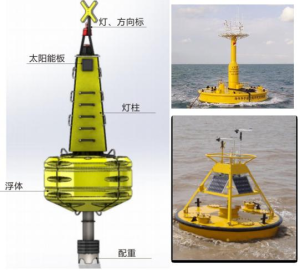
✅ Floating marker: Like a “water signalman”, usually fixed on a buoy, small in size, some with reflective strips, warning lights or monitoring equipment. Its core function is to convey information, indicating safe boundaries and special situations.
Brief summary: Buoys are responsible for “supporting”, and floating markers are responsible for “reminding”. With their cooperation, they can play a great role on the water surface.
Core principle: Why can they float on water? No need to remember formulas, just look at these 2 points
There are essentially two reasons why buoys and floating markers can float stably. You don’t need to understand complex formulas—you can understand them at a glance:
1. Hollow design + light material: Most buoys are hollow and sealed, with built-in air or light foam, and their overall density is smaller than that of water. Just like a plastic bottle floating in water, they will not sink naturally.
2. Buoyancy balance: Floating markers rely on the buoyancy provided by buoys to offset their own weight and achieve balance. They will rise and fall synchronously with the water level (i.e., “constant buoyancy”); some buoys can change buoyancy by immersion depth to monitor liquid level, but the former is more common in daily scenarios.
Practical scenarios in life: It turns out they are hidden in so many places
Buoys and floating markers have a wide range of uses, from daily protection to industrial production. Common scenarios are as follows:
🔹 Waterways and ports: Lit floating markers in waterways mark boundaries, reminding ships to avoid shoals and reefs; buoys in ports form trash booms to intercept garbage and ensure navigation.
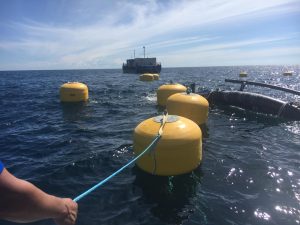
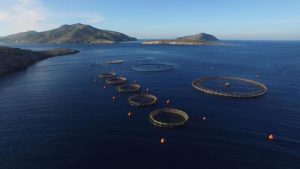
🔹 Aquaculture: Coastal aquaculture rafts use buoys to support fishing nets, divide aquaculture areas, fix positions and resist wind and waves, which are more durable and environmentally friendly than traditional foam floating balls.
🔹 Environmental protection and emergency response: Buoys can form a “marine Great Wall” to intercept marine floating garbage, and oil booms can isolate oil spills; during shipwreck salvage, inflatable buoys can provide buoyancy to lift the sunken ship.
🔹 Monitoring and protection: Marine floating markers are equipped with sensors to monitor wind speed, waves and other data to assist in typhoon early warning; floating markers around bridges and drilling platforms warn ships to stay away and ensure safety.
Small knowledge point: Why won’t floating markers be washed away?
No matter how strong the wind and waves are, floating markers can be fixed stably. The secret lies in the “mooring system”—the buoy is connected to a heavy anchor block on the seabed through an anchor chain, which firmly fixes the entire device like a ship dropping anchor, resisting strong winds and huge waves.
Buoys and floating markers are such “low-key and practical” inventions. With simple buoyancy principles, they guard water safety and assist in production and daily life. Next time you see these “little sentinels” on the water, you will understand the knowledge behind them.
As a professional supplier of mooring systems and buoys & floating markers, Qingdao Haosail Machinery provides reliable water solutions with profound technical accumulation and improved services. The company has core patented technologies for mooring systems, which enhance the stability and operational convenience of the mooring system; buoys and floating markers are made of high-quality corrosion-resistant materials and formed by advanced processes, suitable for multiple scenarios. With global cooperation experience, the company provides a full-chain service from R&D, production to after-sales, and has become a trustworthy partner in the industry.